
The short answer
Yes, 1688 is a real marketplace. 1688.com is the wholesale site that Alibaba Group runs for buyers inside China. Alibaba describes it as an integrated domestic wholesale marketplace in China. The platform is real, but its sellers differ widely, so check each supplier before you pay.
Legitimacy is not the same as reliability. Sellers include factories, wholesalers, wholesale-market stalls and brand owners. Some badges on a store are paid tiers with entry criteria, and none of them proves who makes a product.
1688 is built for buyers in China. Most sellers deliver only inside mainland China and take Chinese payment methods. If you buy from outside China, your user terms are with a Singapore company, under Hong Kong law, and they say users bear transaction risks.
For a buyer abroad, the useful question is narrower than "is this site legit?" Ask whether the company can deliver the goods you ordered, whether the price and invoice are in writing, and what happens if the goods are wrong. The checks below help you answer each one.
What goes wrong most often
Five risks follow, each with a check you can run before you order.
Copied photos and look-alike goods
Photo theft (盗图, dàotú) means using product images without the copyright owner's permission. 1688 acts on it when the owner complains. Several shops can show the same photos, so a picture shows only that a seller has it, not that it makes the product.
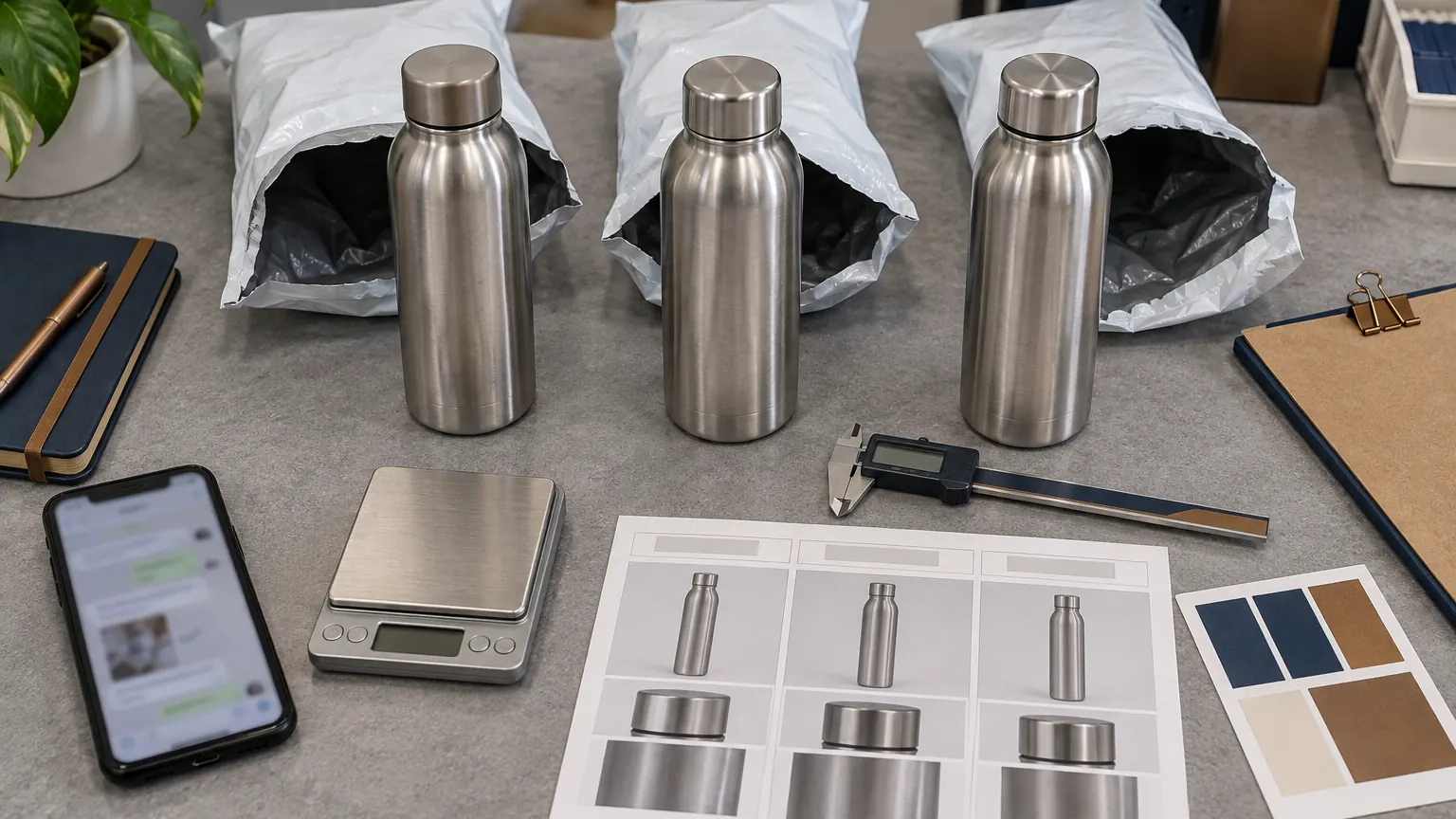
Look-alikes are another risk. A 2022 investigation by Jiemian, a Chinese news site, found rebranded "same factory" goods on 1688. Ask for live photos or a short video of your own sample, with the date visible, and compare them with the sample you approved.
Traders shown as factories
A seller can look like a factory and still be a trader. The 源头旗舰 (yuántóu qíjiàn, "source flagship") tier admits wholesale-market stalls and supply-chain companies that work with three or more partner factories.
1688 counts these badges as "factory" only when the seller also fits the factory profile. A badge alone does not show who makes the product.
Fake low prices and custom-logo listings
1688 treats fake low-price listings as a violation. A "custom logo" option at a token price, used to attract buyers, is one example. Before you pay, confirm the real price, minimum order and lead time in writing.
Quality that drifts from the sample
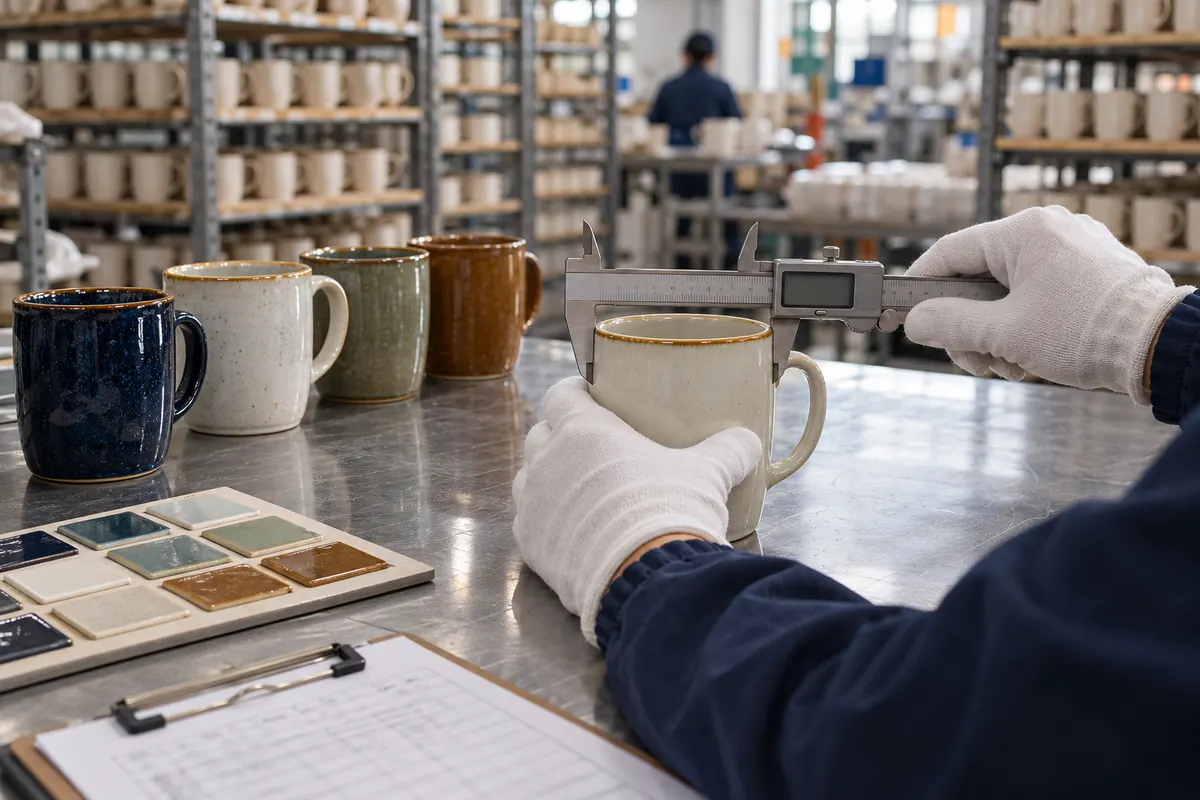
Bulk goods can differ from the sample you approved. Approve a golden sample, meaning a reference sample, and write its specification down before production. Custom goods are excluded from 1688's seven-day no-reason returns, so the written sample and specification matter.
Some custom listings offer 安心购·定制版 (custom-order assurance). Where a seller offers it, each payment stage is held under 1688's secured transaction, and it covers samples and custom orders.
Paying outside the platform
1688 accepts disputes only for orders placed and paid on its platform. That covers Alipay secured transactions and staged payment. A deposit sent by bank transfer falls outside 1688's dispute service.
If a deposit must go to a company account, pay only an account in the exact legal name of the company you contracted with, and ask for an invoice. For disputes that do arise, see Trade Dispute Support.
Reading a 1688 store
A store page shows many numbers. Read each one for what it measures, and do not treat any of them as proof of quality. For the terms, see what 1688 badges mean and 1688 terms in plain English.
Badges are paid tiers
Badges such as 诚信通 (chéngxìntōng, the basic paid seller membership), 实力商家 (shílì shāngjiā, a paid upgraded-seller tier) and 超级工厂 (chāojí gōngchǎng, the top paid factory tier) have entry criteria. They show that a seller paid for a tier and met its entry criteria. They do not show who makes the goods.
The 2023 criteria for 超级工厂 required a company registered in mainland China, production within its business scope, and a real site of at least 2,000 square metres, or 1,000 square metres plus one more condition. Check the current rule before you rely on these figures.
Third-party audits and their limits
A 深度验厂 (shēndù yànchǎng, deep factory audit) is an on-site check by a third-party body, such as SGS or TÜV Rheinland. Its eligibility rule accepts premises held by an affiliated factory, so the audit may describe a related plant rather than the seller's own workshop. It is evidence from one visit, not a permanent check.
Sales counts and repeat-buyer rate
全网销量 (quánwǎng xiāoliàng) adds up sales of same-style goods across several platforms, including Taobao and Tmall. It is not the store's own sales. 同款 (tóngkuǎn, "same style") means the item looks the same, not that it comes from the same maker.
回头率 (huítóu lǜ) is the repeat-buyer rate, the share of buyers who order again. Machine translation often shows it as "return rate", which is wrong.
The factory file is partly seller-filled
Factory files on 1688 combine public data with data the seller filled in, and the platform marks them for reference only. Some company summaries are labelled as generated by AI. Use these pages to shortlist sellers, then confirm the details in company records and during a visit.
Checking the company behind the store
Every store is run by a company. Ask the seller for the company's exact Chinese legal name. Check that the invoice comes from the same company, because 1688 rules require invoices from the shop's own company.
Search that name in China's national enterprise credit system (gsxt.gov.cn). It shows the legal name, credit code, status, business scope, legal representative and any abnormal listings or penalties. Check that the business scope includes production for your product.
Court enforcement records sit in a separate system. Published court judgments fell from 19.2 million in 2020 to 5.1 million in 2023, so an empty search shows less than it seems.
Save the search results and the date you ran them with your order record. That way the check can be repeated, and the company you checked can be shown to match the invoice.
Factory or trading company: signs to check
No single sign settles the question. Combine these checks, and treat each one as a clue.
- Business scope: the registered scope should include production or processing.
- Production address: the address should match where the goods are made. A visit can confirm it.
- Insured staff: ask how many staff the company insures, and whether that fits the output you expect.
- Licences in the company's own name: check any required production licence against the company behind the store.
- Product focus: a focused range of related products can suggest a maker. A catalogue spanning unrelated categories can suggest a trader.
- Factory file and photos: treat the seller-filled factory file as a lead. Ask for live photos of the workshop and the production line.
- Invoice from the shop's own company: the invoice must come from the company behind the store.
A trading company can still suit a mixed order of several products. In that case, ask who makes each item, and check that maker's records.
Samples, inspection and payment timing
A simple sequence works: confirm the specification in writing, approve the golden sample, pay on the platform, and inspect before the order completes.
Inspect before the order completes. For cross-border orders, signing for goods at a China warehouse you choose counts as your own signature, so visible defects must be found before signing.
Orders can complete 10 days after dispatch, once the goods are signed for within 8 days. The seller is then paid, unless a refund is already open. Schedule your inspection early, and open a refund before completion if the goods are wrong.
Late dispatch compensation is small: 3% of the order value, with a ¥30 cap. Treat it as goodwill, not as cover for your loss.
Staged payment on the platform keeps 1688's dispute service available. For inspection services, see Quality Assurance.
Questions to ask the seller in writing
Put these questions to the seller before you pay, and keep the answers with the order record.
- Which company will issue the invoice, and which invoice type will it be?
- What is the minimum order and the price tier for my quantity, in writing?
- What dispatch time do you promise, in days, and will it appear in the order?
- Is a golden sample available, and what does a sample cost?
- Which production address will make my order, and can I see it by visit or live video?
- Will these terms be on the 1688 order itself, not only in a separate chat?
What InterBridge checks for you
InterBridge runs a background check on the supplier company you deal with, at no extra cost. It reads the Chinese company and court records and shares the results with you.
A background check reduces risk. It does not remove it. That is why we also inspect before you pay the balance.
Goods bought for clients can be delivered to InterBridge's own warehouse in Guangzhou. There we check the count and visible damage, then repack or consolidate the goods for export.
Factory visits are quoted separately. For the checks in detail, see what our background check covers.
Related guides
Read 1688 vs Alibaba: prices, suppliers and protection and How to pay 1688 suppliers from outside China.
Sources
- Alibaba Group, About Alibaba businesses (accessed 2026-10-18): www.alibabagroup.com
- Alibaba Group, E-commerce Business Group (accessed 2026-10-18): www.alibabagroup.com
- 1688 Platform Service Terms, 2025 version (effective 2025-08-26): terms.alicdn.com
- WorldFirst UK, How to buy from 1688 (2026-08-03): www.worldfirst.com
- 1688 rule 945, transaction dispute rules (rev. 2025-06-27): rulechannel.1688.com
- 1688 rule 20005656, cross-border dispute rules (rev. 2026-01-20): rulechannel.1688.com
- 1688 rule 20003242, order auto-completion (rev. 2025-10-11): rulechannel.1688.com
- 1688 rule 20001653, merchant dispatch rules (rev. 2026-05-15): rulechannel.1688.com
- 1688 rule 11004494, invoice disputes (rev. 2025-06-27): rulechannel.1688.com
- 1688 rule 5282, seven-day no-reason returns (2024-02-02): rulechannel.1688.com
- 1688 notice 20003774, custom-order assurance (2023-08-15): rulechannel.1688.com
- 1688 notice 20003289, Super Factory criteria (2023-07-05): rulechannel.1688.com
- 1688 rule 20010391, source flagship standards (2026-07-13): rulechannel.1688.com
- 1688 rule 20010459, factory profile rule (2026-07-21): rulechannel.1688.com
- 1688 deep certification page (accessed 2026-10-18): shendu.1688.com
- 1688 wiki, repeat-buyer rate (accessed 2026-10-18): www.1688.com
- State Council, enterprise credit system (gov.cn, 2014-08-23): www.gov.cn
- South China Morning Post, published judgments (accessed 2026-10-18): m.scmp.com
- InterBridge, Why InterBridge (company statement): interbridge-solutions.com
Preguntas respondidas en este artículo
What does Super Factory (超级工厂) mean on 1688?
It is a paid top factory tier on 1688, not a general quality mark. The 2023 criteria required a mainland-registered company, production within its business scope, and a real site of at least 2,000 square metres, or 1,000 square metres plus one more condition. Treat the badge as one signal, and check the company records too.
What does return rate mean on a 1688 store?
Usually it is a mistranslation of 回头率 (huítóu lǜ), the repeat-buyer rate. That figure is the share of buyers who order again, not the share of goods returned. A high repeat-buyer rate shows repeat business. It does not show product quality, so read it alongside the company records and the goods you receive.
Can I check a Chinese company's registration myself?
Yes. China's national enterprise credit system (gsxt.gov.cn) shows a company's legal name, credit code, status, business scope and any penalties. Search with the exact Chinese legal name or the credit code. The site is in Chinese, so ask an agent to read the entries, or confirm the details with the seller.
Does a 1688 factory audit prove quality?
No. A 深度验厂 (deep factory audit) is an on-site check by a third-party body, such as SGS or TÜV Rheinland, and it reflects one visit. Its eligibility rule lets an affiliated factory host the audit. Read the report's scope, and check that the audited address matches the production site where your order will be made.
Haz una pregunta sobre este artículo
Revisamos las preguntas para evitar contenido irrelevante y spam. Solo usamos tu correo si hace falta responder.
Preguntas y comentarios
Todavía no hay comentarios públicos. Puedes hacer la primera pregunta abajo.